


Rococo Style: How it Distincts in Architecture, Furnishings and Painting
Rococo Style: Birth and Development The Rococo, as a reflection of the trends, tastes and way of life of France…











€12.500,00



Eighteenth century (nineteenth century
94 x 118 cm. in a fine gilded and carved wooden frame 101 x 123
Francesco Albani (Bologna 1578 – 1660), Copy from
The Dance of the Cupids
Oil on the table
94 cm x 118 cm.
in a fine gilded and carved wooden frame 101 x 123
Full details of the work (click HERE)
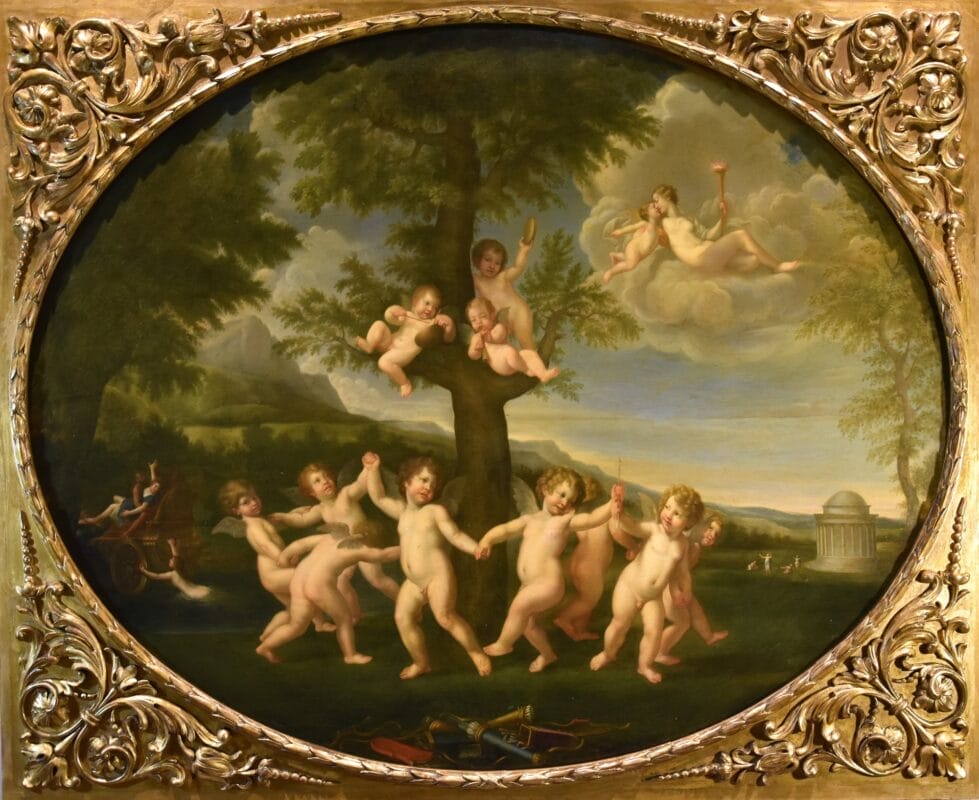
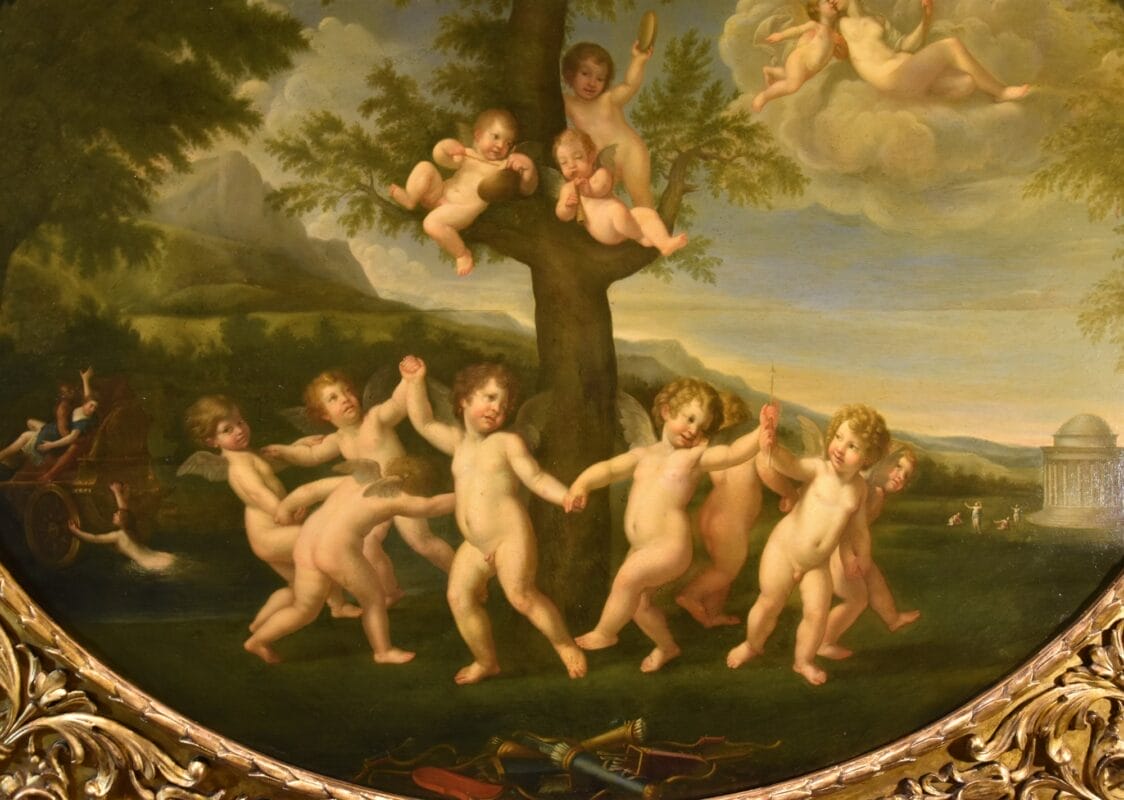
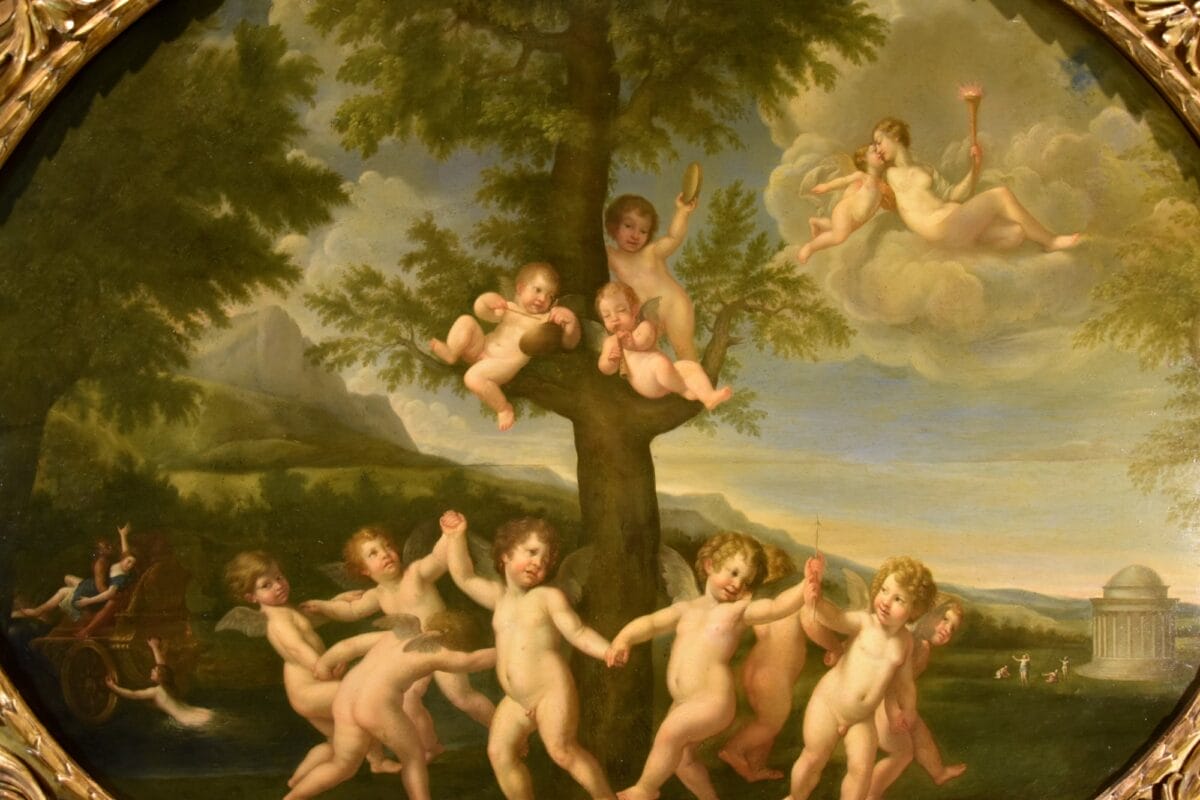
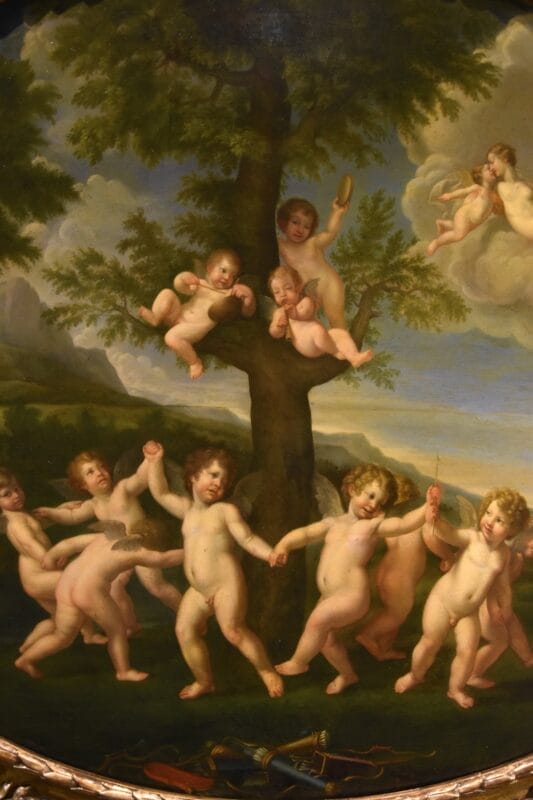
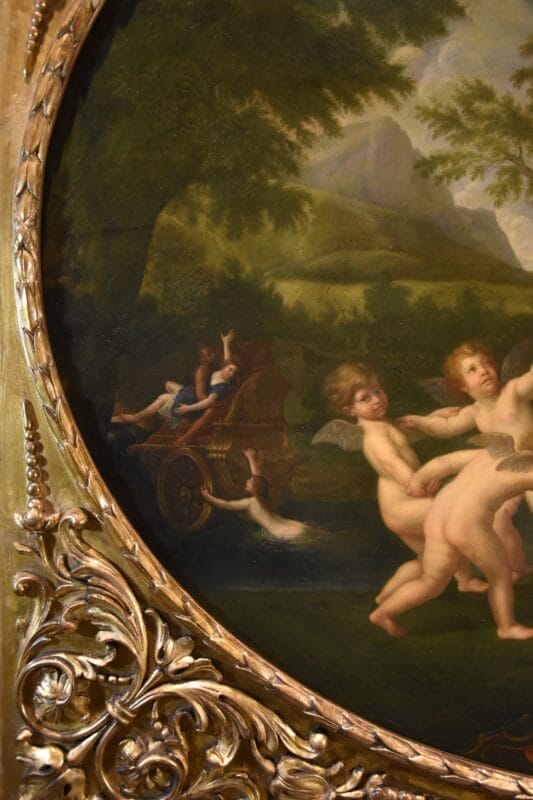
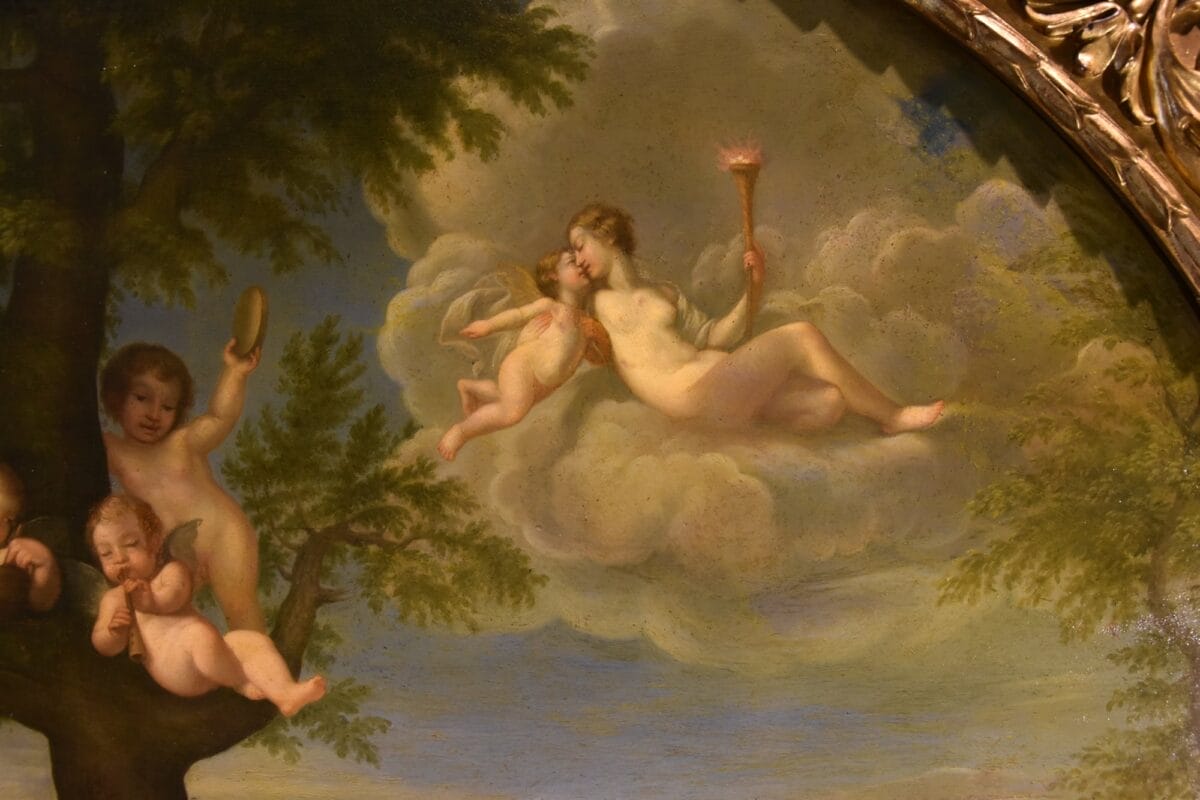
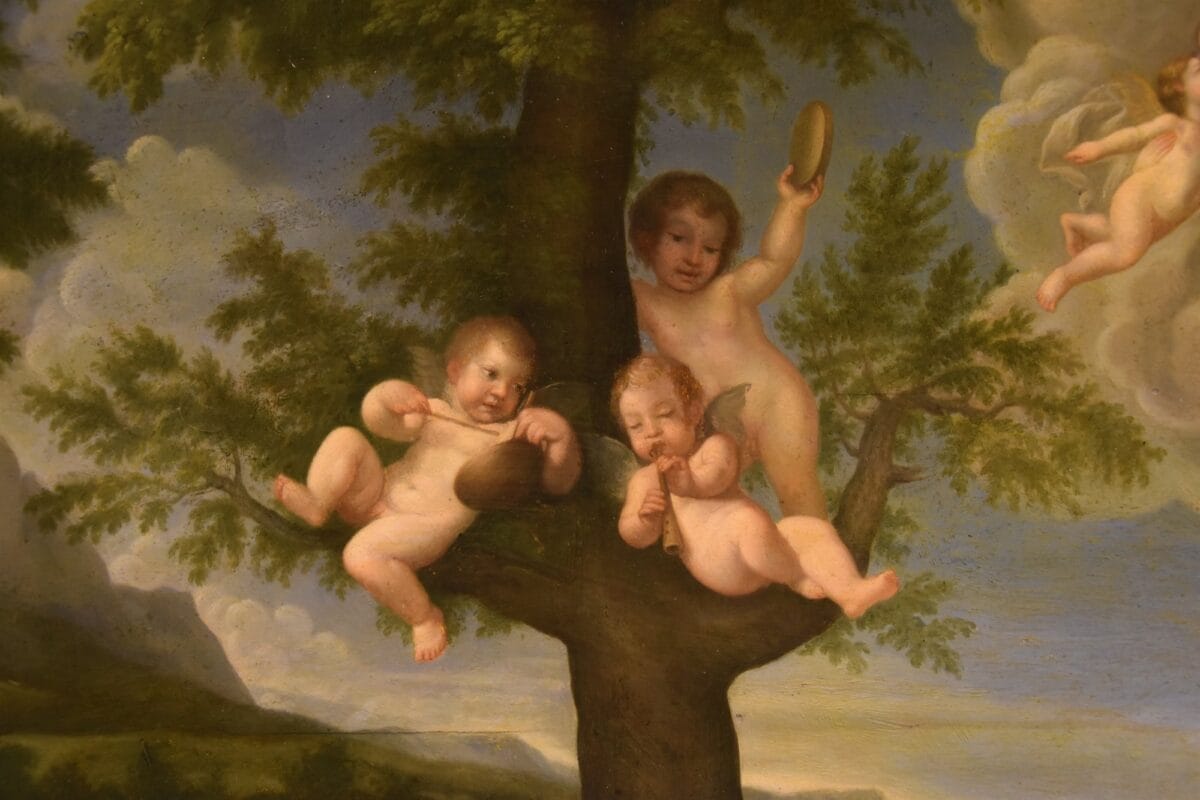
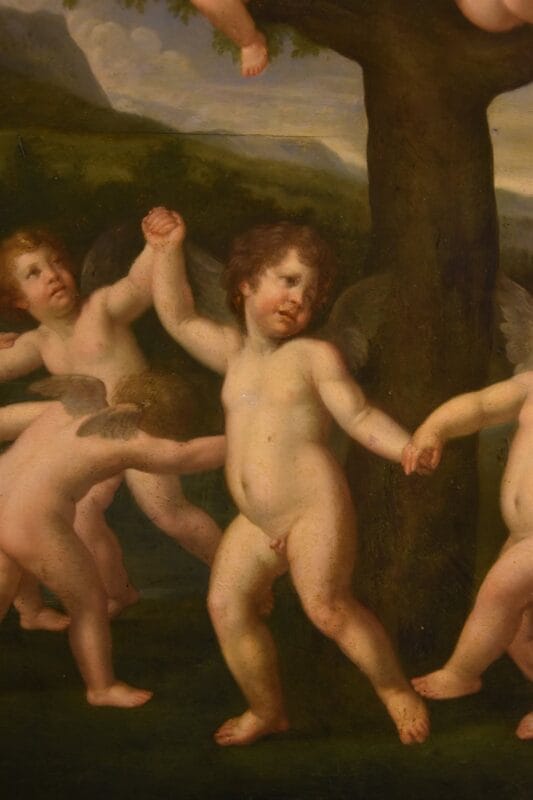
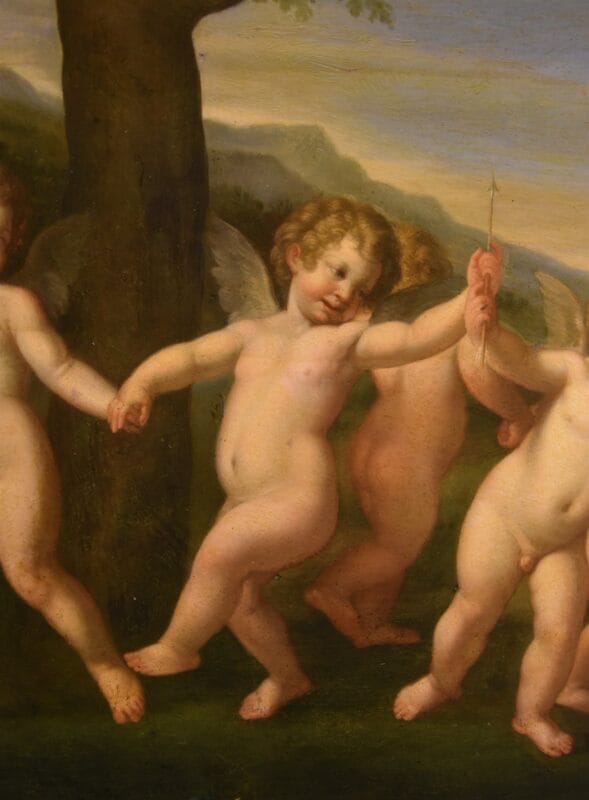
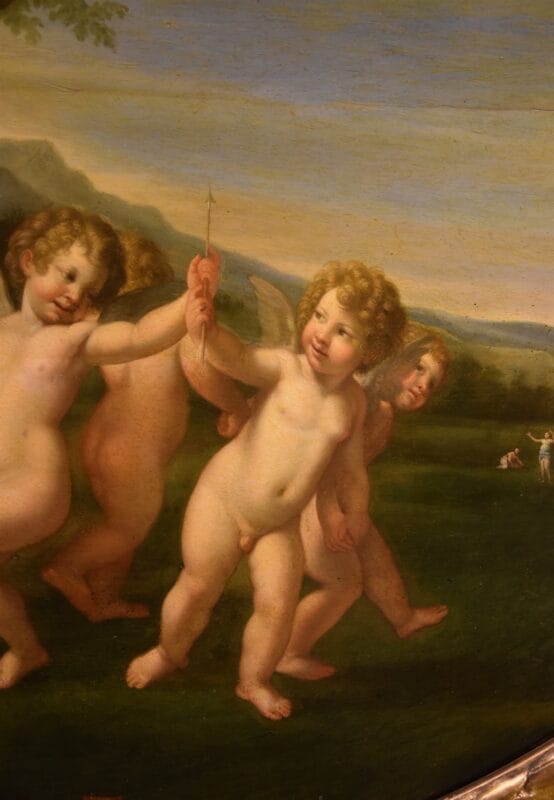
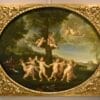
We see a festive dance of cupids arranged in a circle around a tree, on which other putti play musical instruments, while in the foreground are other objects, including bows and quivers, placed on the grass. In the background on the left is the scene of a woman being kidnapped and dragged on a chariot: this is precisely the abduction of Proserpina by Pluto, who, hopelessly in love, took her with him to the underworld to make her his bride. On the right, among the clouds, Venus kisses Cupid with a torch, while below is the Temple of Vesta, still standing in Rome today, where the sacred fire was once kept.
The painting is an interesting ancient replica of the masterpiece by Francesco Albani, entitled “Dance of the Cupids” and dating back to around 1660, currently preserved at the Pinacoteca di Brera in Milan (see image in the photographic details).
Known for his light-hearted, decorative depictions of mythological and allegorical subjects, Francesco Albani is considered, along with Domenichino and Guido Reni, one of the greatest exponents of Bolognese classicism and therefore highly sought-after by the cultured patrons of the time.
Thanks to a style characterized by idyllic compositions and therefore pleasing to the most intimate tastes of the patrons, works such as these have always enjoyed extraordinary success with critics and the public, to the point of being replicated several times.
The depicted subject was also highly sought after in later periods due to its symbolic meaning of the triumph of Love: the painting is in fact an interesting allegory of marital union and must therefore have been commissioned, within the Farnese family, on the occasion of a wedding or a nuptial promise.
This is what the cupids would refer to, having put down their bows with which they make lovers fall in love, and playing happily because they have accomplished the mission assigned to them by Cupid: Pluto has fallen in love with Proserpina and abducts her as a sign of his unstoppable love. Venus finally rewards Cupid with a grateful kiss, while the temple of Vesta, where the hearth is always burning, augurs the enduring love.
ADDITIONAL INFORMATION:
The work is sold with a certificate of authenticity and a descriptive iconographic sheet.
We take care of and organize the transport of the purchased works, both for Italy and abroad, through professional and insured carriers.
Rococo Style: Birth and Development The Rococo, as a reflection of the trends, tastes and way of life of France…

The Empire style, with its magnificent fusion of majesty and grace, remains an icon of classic furnishings, exerting a timeless charm…

Giò Ponti is one of the artists who most dominated the Italian post-war period, acting as a spokesperson for important innovations in the world…
€12.500,00
have viewed this article in the last 30 minutes.