


Rococo Style: How it Distincts in Architecture, Furnishings and Painting
Rococo Style: Birth and Development The Rococo, as a reflection of the trends, tastes and way of life of France…


€0,00


early seventeenth century
180 x 142
Jacopo Palma the Younger (Venice, 1549 – 1628), workshop of
Cain and Abel
Oil on canvas, 180 x 142 cm – with frame, 205 x 168 cm
The work depicting the Killing of Abel, executed in oil on canvas in the first quarter of the 17th century, is part of the movement of Venetian painting dominated by the artistic legacy of Jacopo Negretti, known as Palma il Giovane. Born in Venice in 1548 into an illustrious family of artists, which included Palma il Vecchio and Bonifacio de' Pitati, the master trained between the lagoon city, Urbino and Rome under the protection of Guidobaldo II della Rovere, assimilating the lessons of Raphael, Michelangelo and Roman Mannerism. Having entered Titian's workshop in 1570, where he completed the famous Pietà, Palma established himself as one of the most prolific and influential figures of late sixteenth-century and early seventeenth-century Veneto. His teachings fostered a vibrant workshop in which numerous painters active in the first quarter of the seventeenth century trained and collaborated, including Giovanni Andrea Bertanza, and his style became a lasting point of reference for generations of artists active in Friuli and the Veneto province. In the painting in question, the dramatic biblical scene shows Cain in the act of violently throwing a club at his brother Abel, whose body lies face down on the ground, captured in an anatomical glimpse of strong emotional impact. The composition derives directly from the master's autograph models, specifically taking up the structure of the Killing of Abel painted by Palma the Younger in 1603 for the interior of the organ door of the Cathedral of Santa Maria Annunciata in Salò. Compared to the Salò example, the canvas in question has a slightly narrower compositional cut and a variation in the types of fruit included in the still life piece located at the bottom left. A similar iconographic and formal scheme was also replicated by the master in the version now preserved at the Kunsthistorisches Museum in Vienna, executed in the same years for the prestigious Venetian collection of Bartolomeo della Nave. The construction of the figures and the plastic rendering of the muscles reflect the compositional lesson of Palma the Younger and the reinterpretation made by the students and collaborators of his workshop. The contracted bodies, in strong dynamic tension, recall the solutions adopted by the master in the canvases of the Sinners wrapped in flames, executed in 1600 for the Scuola di San Fratin and today preserved in the Aula Magna of the Venetian Athenaeum, where the anatomies are exalted in complex and dramatic poses. Similarly, the figure of Abel lying on the ground recalls the foreshortened body in the Conversion of Saul in a private collection in Bergamo, demonstrating how the anatomical rendering and the skillful use of chiaroscuro were declined by the collaborators active around the master. The stage design has its roots in the great Venetian tradition of the 16th century. The subject of the Killing of Abel finds a famous precedent in Titian's canvas created for the church of Santa Maria della Salute in Venice, as well as in the work on the same theme painted by Tintoretto for the Scuola della Trinità and now preserved in the Gallerie dell'Accademia. From the two great masters of lagoon painting, Palma the Younger and the painters of his workshop borrowed the violent dynamism, the expressiveness of the drapery and the strong chiaroscuro contrast, translating them into a rapid, harmonious and effective painting style, fully representative of the workshop production of the early seventeenth century.
Rococo Style: Birth and Development The Rococo, as a reflection of the trends, tastes and way of life of France…
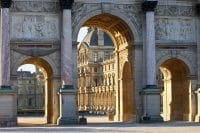
The Empire style, with its magnificent fusion of majesty and grace, remains an icon of classic furnishings, exerting a timeless charm…
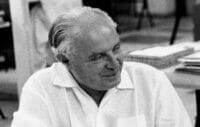
Giò Ponti is one of the artists who most dominated the Italian post-war period, acting as a spokesperson for important innovations in the world…
€0,00
have viewed this article in the last 30 minutes.