


Rococo Style: How it Distincts in Architecture, Furnishings and Painting
Rococo Style: Birth and Development The Rococo, as a reflection of the trends, tastes and way of life of France…


€19.800,00


2000
Width 257 cm Height 187 cm
Fresco on panel 1995
Width 257 cm
Height 187 cm
BIOGRAPHY Giorgio Celiberti was born in Udine in 1929. He began painting at a very young age; in fact, at just nineteen, he took part in the 1948 Venice Biennale, the first post-war one. In Venice he attended the art high school and then Emilio Vedova's studio. In the lagoon city he shares his bedroom-study with Tancredi at the Accademia guesthouse. He frequented Carlo Ciussi, Marco Fantoni, and Romano Parmeggiani, who were also experiencing a formative period in Venice during the same years. Following in the footsteps of his uncle Modotto, one of the most important Udine painters of the 1930s, a protagonist, together with the Basaldella brothers (Afro, Dino and Mirko), Filipponi and Candido Grassi, of the twentieth-century renewal of Friulian art, Celiberti moved to Paris at the beginning of the 1950s, where he came into contact with the major representatives of figurative culture from beyond the Alps. Thus began a series of journeys that would remain fundamental to his education: in 1956 he won a scholarship from the Ministry of Education that allowed him to stay in Brussels, where he had the opportunity to complete his research on avant-garde art. From 1957 to 1958 he was in London: these were the years in which the expressionism of Bacon and Sutherland dominated. A tireless traveler, curious, internally tormented by a fever for novelty and knowledge, he stayed in the United States, Mexico, Cuba, and Venezuela. From these experiences he drew a repertoire of signs and techniques, which he reworked in the following years. Upon returning to Italy, he moved to Rome for a long and fruitful period, where he frequented the leading artists of the Italian scene. His return to Udine, in the mid-1960s, allowed Celiberti to begin a process of self-reflection, which continues to this day, rich in creative outcomes always characterized by a consuming desire for experimentation. In 1965, an event occurred that was destined to radically change his art. Visit the Terezín concentration camp, near Prague, where thousands of Jewish children, before being massacred by the Nazis, left behind touching testimonies of their tragedy in graffiti, drawings, short diary entries, and a book of poems. In 1975 the Anthropomorphic Walls arose from reflections on the finds from the necropolis of Porto, near Fiumicino, from early Christian Rome, from Roman Aquileia and from Lombard Cividale. Since the 1960s he has dedicated himself specifically to sculpture, even if his creative activity has been characterised, with ever greater emphasis, by an original symbiosis between plastic and pictorial expression. The first works in bronze, stone and ceramic are dedicated to the monumental themes of Horses and Knights, followed by an original faunal gallery: Cats, Birds, Goats. Subsequently, the sculpture abandons the monumental grandeur to weave a private conversation with the traces of an ancestral past, which seem to emerge from a collective unconscious, of which the artist acts as the inspired spokesperson. In affinity with the “Archaeological” themes of painting, the Schegge, the Stele, which recall ancient tombstones engraved with enigmatic hieroglyphic inscriptions, the light Bassori, similar to shreds of lost civilizations sunk in an immemorial past, were born. He has participated in the most significant art events in Italy and abroad: the Venice Biennale, the Rome Quadrennial, the Esso Prize, the Burano Prize, the Marzotto Prize, the Michetti Prize, the La Spezia Prize, the San Marino Prize, the Autostrada del Sole, the International Fiorino Prize, and the exhibition of New Italian Painting in Japan. Over a hundred personal exhibitions. Among the most significant are those of Paris (1953 and 1982); London (1956); Dallas (1963); New York (1963); Toronto (1976); Vienna (1978); Amsterdam (1979); Nova Gorica (1982); Novo Mesto (1983); Jaffa, Jerusalem and Tel Aviv (1983); Brussels and Strasbourg (1987); Salzburg, Los Angeles (1989); London, Düsseldorf, Barcelona (1990); Madrid and Paris (1992); Millstat, Ghent (1993); Chicago (1995); Zagreb Museum (1998). He has also exhibited several times in Bologna, Florence, Genoa, Palermo, Rome, Turin, Trieste, Venice, Verona and of course Udine. An anthology of paintings was set up in 1980 at the Spazzapan Gallery in Gradisca d'Isonzo (Gorizia). The following spring saw the exhibition at Villa Simes Contarini in Piazzola sul Brenta (Padua), in whose park, alongside the hundred or so paintings presented in the rooms, large sculptures in bronze, stone and steel were placed. The Villa Simes experience was resumed and developed in the summer of 1985 inside and in the parks of the Venetian Villas of Carbonera (Treviso). In the same year, Celiberti, invited by the Municipality and the Trieste Tourist Board, placed monumental steel and resin steles in the main streets and squares of the Julian capital for an entire year, bronze sculptures at the Castle of San Giusto, and stone sculptures at the Castle of Miramare. The exhibition moves from Trieste to Udine, winding its way through the castle, the city and the Friulian Centre for Plastic Arts. Between the end of the 1980s and the beginning of the 1990s, prestigious exhibitions continued in Italy and abroad: Exhibition at the Pagani Foundation in Legnano (1987); anthological exhibition at Villa Varda in Brugnera di Pordenone, at the Palazzo dei Diamanti in Ferrara, at the Art LA of Los Angeles (1989); Exhibitions at the Davico Gallery in Turin; at the Forni Gallery in Bologna, at Art London in London, at the Art Forum in Düsseldorf, at the Sala Pares in Barcelona, personal exhibition at the Giulia Gallery in Rome (1990); exhibitions at the Arco in Madrid, at the Gran Palis in Paris, at the Salone di Settembre in Venice, at the Galleria Rotta in Genoa and a new anthology of painting and sculpture in the spaces of the G. E. Ghirardi of Villa Simes Contarini in Piazzola sul Brenta (1992); solo exhibition at the Galleria Annunciata in Milan, exhibition of frescoes at the Galleria B. S. of Venice, exhibition of monumental bronzes in the city of Millstatt, Austria (1993). In 1991 Celiberti also completed two prestigious public works: the Mosaic of Friendship in the atrium of the University of Ljubljana and the fresco covering over 800 square meters on the vault of the Kawajyu Hotel in Shirahama, Japan. Other exhibitions were held in 1994 at Palazzo Costanzi, at the Risiera di San Saba in Trieste and at the Fiac in Paris. In January 1996, an anthological exhibition opened in Conegliano, at Palazzo Sarcinelli, followed by one set in Pergine Castle. In 1997, an exhibition of paintings and sculptures was included in the events at Villa Manin in Passariano. The exhibition activity in 1998 testifies to the growing interest in the artist: Celiberti's sculptures are inserted in a European context set in the bastions of the walls of Treviso, Lignano Sabbiadoro hosts other monumental sculptures and the master holds a solo exhibition at the Angel Orentsanz Foundation gallery in New York, at the Museum of Saint Paul de Vence and at the Museum of Zagreb. On an international level, he exhibited in Umag, Ljubljana and Munich between 1999 and 2000, and in the Jubilee year he created a three-metre cross at the Church of Fiumesino (Pordenone). Numerous exhibitions were held during this period, both in Italy and abroad, among the most important being a 2002 exhibition in the former ghetto of Vittorio Veneto and in the rooms of the former university of Bergamo. In 2003 Celiberti won the Sulmona Prize and in 2004 his hometown, Udine, dedicated an anthology to him at the “Giovanni da Udine” Theatre with a wide selection of his recent productions. In 2005, the Villa Breda Museum in Padua hosted: “Giorgio Celiberti Anthology from the Biennale to Giotto” and Prince Emanuele Filiberto of Savoy donated a large painting by Celiberti to the MART of Trento and Rovereto, which was added to the Museum’s permanent collection. Group exhibition of sculptures in Prato della Valle and in the gardens of the Scrovegni Chapel. 2006: exhibitions in Venice (Venice Design Art Gallery), Munich (Galerie Prom), Conegliano (House Museum of the “Cima da Conegliano” Foundation). 2007: Castelfranco Veneto (Art&Media Gallery) and Tolmezzo (Frisacco Palace). 2008: Prato (Confartigianato), Cividale del Friuli: outdoor sculpture exhibition. 2009: for his eightieth birthday he exhibits at the Jewish Museum of Venice and at the Abbey of Rosazzo. In 2011 he was invited to the Venice Biennale for the fifth time; he donated a large Stele which was placed in the courtyard of the Terezín fortress (Prague). 2012: exhibition at the Casa dei Carraresi in Treviso. Sculpture exhibition in the squares of Valletta (Malta). 2013: retrospective exhibition at Villa Manin. Between 2014 and 2015: exhibition The Passion and the Body of History at the National Museum of Ravenna. In 2016 he exhibited at the Philippe Daverio Library in Milan, in 2018 at the Marino Marini Museum in Pistoia, from 2019 to 2020 at the Maca Museum of Contemporary Art in Acri (Cosenza). 2021: exhibition at the Luxury Hotel Danieli in Venice and at the Heart gallery in Vimercate (Monza and Brianza). Installation for Holocaust Remembrance Day, January 26, 2022, on the tallest bell tower in Italy in the town of Mortegliano (Udine), and exhibition in San Vito alle ex carceri. Honorary citizenship from the Municipality of Mortegliano with recognition of the Lombard Seal by the President of the Friuli Venezia Giulia Regional Council Pietro Mauro Zanin. Rome 2022: Visit to the Ministry of Culture and honorary mention from Minister Dario Franceschini; visit to the Ministry of Economic Development: meeting with Minister Giancarlo Giorgetti. Exhibition in Cividale del Friuli from June 25th to September 25th. On October 5, 2022, the Historical Archives of the Venice Biennale will dedicate a study conference to him entitled: “Giorgio Celiberti, from the 1948 Biennale to today.” Midolini Lifetime Achievement Award. Exhibition “Celiberti’s Jewels” at the “Loft ai Dogi” in Passariano di Codroipo (Udine). Solo exhibition in Portogruaro (Venice) at the Arte Androne 51 gallery. 2023: exhibition in Gradisca d'Isonzo, at the La Fortezza gallery. Exhibition at the headquarters of the Friuli Venezia Giulia Regional Council. Lives and works in Udine.
Rococo Style: Birth and Development The Rococo, as a reflection of the trends, tastes and way of life of France…
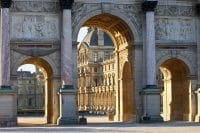
The Empire style, with its magnificent fusion of majesty and grace, remains an icon of classic furnishings, exerting a timeless charm…
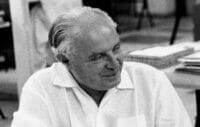
Giò Ponti is one of the artists who most dominated the Italian post-war period, acting as a spokesperson for important innovations in the world…
€19.800,00
have viewed this article in the last 30 minutes.